
UX Research — How to do ‘interview’?
— Italian version below — Versione italiana sotto
UX Tools — Interview
Creating an interview for user experience (UX) design requires careful planning to ensure you gather meaningful insights from participants. The steps to follow are:
1. GOALS: First, ask yourself what you want to achieve from these interviews. Do you want to understand user needs, evaluate the usability of a product, or gather feedback on a new feature?
2. PARTICIPANTS: Decide who the ideal users are for your interviews. They can be current users of the product, potential users, or people with experience in the specific industry.
3. INTERVIEW POINTS: Prepare a series of open-ended questions that will help you explore the experiences and opinions of the participants. Questions should focus on their activities, needs, frustrations, and expectations regarding the product or service.
4. CONDUCT INTERVIEW: During the interview, ensure the participant feels comfortable and free to express their opinions. Provide clear and reassuring instructions on the interview’s objective and how the collected information will be used.
5. ACTIVE LISTENING: Be an attentive listener during the interview. Take notes of participants’ responses and ask follow-up questions when necessary to gain a deeper understanding of their experiences.
6. NOTES: After each interview, take detailed notes and record participants’ responses. Once all interviews are complete, analyze the collected data to identify patterns, trends, and critical points that can guide the design decision-making process.
7. RESULTS ANALYSIS: Use the interview results to inform the design process, make improvements to the product or service, and guide future decisions.
Remember that UX interviews are an opportunity to better understand users and improve the overall experience of the product or service. Ensure you maintain an open, empathetic, and user-centered approach throughout the process.
How to Choose Participants? Here are the steps that will help you select them.
Selecting users for a UX interview is a crucial step to obtain meaningful and valid information. Depending on the chosen sample, you will get different results, and it is important to be sensitive and reason about the objective for which certain people are being chosen. The list you will find here will help you better focus on the fundamental points that your sample must meet. Make sure in the final selection phase to stick with a number of users not too large compared to your team’s capabilities because for each user, you will have to dedicate the right amount of time and collect the correct data. You can’t be too tired to do it otherwise you will compromise your analysis.
1. TARGET: Who are the users who will use your product or service? Clearly define the demographic characteristics, behaviors, and goals of your users.
2. CRITERIA: Based on the definition of the target audience, determine the specific criteria you will use to select users for the interview. These criteria could include age, gender, professional background, industry experience, level of technological competence, etc.
3. SAMPLE: Try to obtain a variety of participants that represent your target audience as much as possible. This could include users with different levels of experience, cultural backgrounds, and goals.
4. POTENTIAL USERS: You can involve both current and potential users. Current users can provide valuable information about their current experiences with your product, while potential users can offer fresh perspectives and constructive criticism.
5. SCREENING: You can use short surveys or preliminary interviews to identify users who meet the selection criteria. This will help ensure that the users you interview are truly relevant to your study.
6. DIVERSITY: Make sure to include a variety of perspectives, including users with disabilities, diverse cultural backgrounds, and other forms of diversity. This will help you identify a wider range of user needs and viewpoints.
Interview Structure
The interview is not a quiz with correct and incorrect answers, but a equal conversation about opinions and feelings.
Based on your goals, you need to structure the interview, so prepare a list of open-ended questions that focus on the point you need, do not ask vague questions, ask circumscribed questions. Try to make the purpose of the question clear to your user but without suggesting the answer. Avoid hard verbs and be as open as possible to their responses, do not ask questions where the answer is dual, yes or no, but prefer questions with a less black or white indication such as perhaps low, medium, high. Make sure the answer is argued, push your user to talk, it is important that they trust you and do not limit themselves in expressing their idea.
“When you use [product or service name], what are the main challenges or frustrations you encounter?”
This question is useful because it gives you a direct insight into users’ experiences with your product or service and helps you identify issues you may need to address during the design and development process.
Active Listening
Active listening is a communication technique in which the receiver demonstrates full understanding of the message communicated by the other party, whether verbal or non-verbal.
In summary, it involves complete attention and empathetic understanding of the other person’s perspective. Some practical advice can be to provide full attention and focus entirely on the person speaking, avoiding distractions and interruptions. Repeat or summarize briefly what the other person has said to demonstrate understanding of their message. Recognize and validate the other person’s emotions, even if you disagree with their point of view. Ask questions to clarify or deepen the meaning of what has been communicated. Suspend personal judgments and remain open and respectful towards the other person’s point of view.
Collecting Interview Data
Taking notes during a UX interview is essential for capturing detailed and crucial information about user feedback. Decide in advance what format you will use to take notes. You can use a physical notebook, a sheet of paper, a digital note-taking application, or recording software (with the participant’s permission). Prepare a note-taking template with key sections you want to capture during the interview, such as user responses to specific questions, observations on product interactions, or expressions of emotions and frustrations.
Take notes concisely and clearly, highlighting key points and important information. Use keywords, bullet points, and symbols to organize information in a readable and easily retrievable way later on. When taking notes on user feedback, make sure to clearly indicate who provided that specific information or comment. For example, note the user’s name or use an abbreviation to identify different participants. In addition to verbal responses, take note of participants’ facial expressions, body language, and non-verbal cues during the interview. This information can provide valuable insights into users’ emotions and engagement.
After the interview, take time to review and organize your notes. This may include creating a summary of key information, categorizing feedback based on main themes, or creating action lists based on user observations.
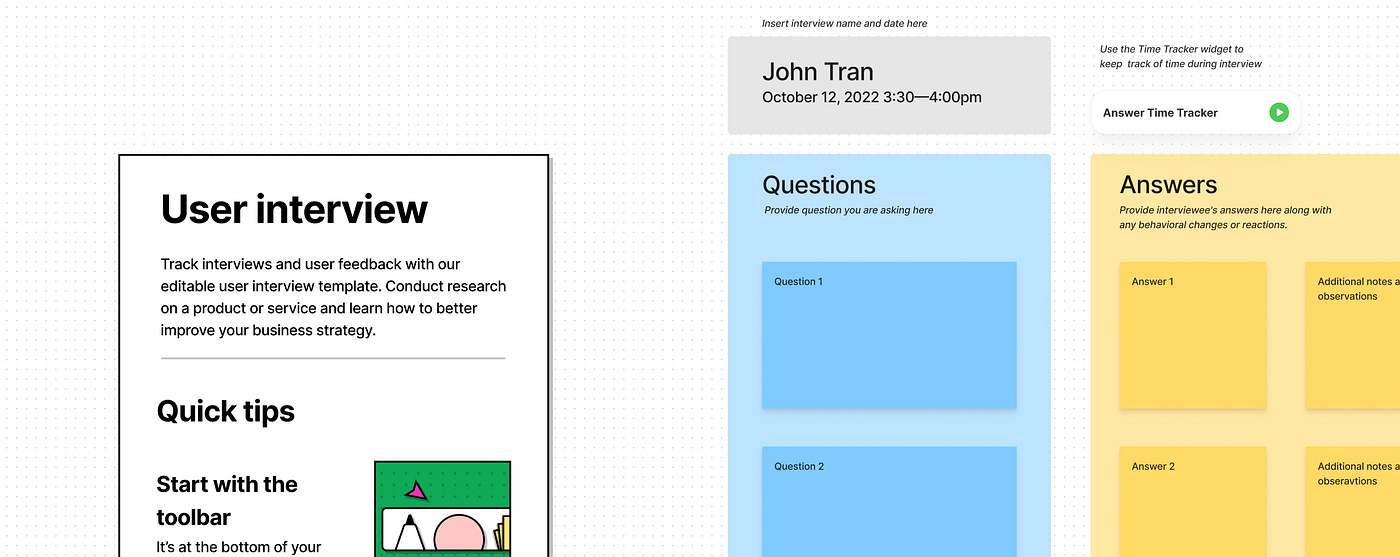
Free template for user interview
Thank you for reading!
— Italian version
Strumenti Ux — Intervista
Creare un’intervista per il design dell’esperienza utente (UX) richiede un’attenta pianificazione per assicurarsi di ottenere informazioni significative dai partecipanti.
I passaggi da seguire:
1. OBIETTIVI: Prima di tutto, chiediti cosa vuoi ottenere da queste interviste. Vuoi comprendere le esigenze degli utenti, valutare l’usabilità di un prodotto o raccogliere feedback su una nuova funzionalità?
2. PARTECIPANTI: Decidi chi sono gli utenti ideali per le tue interviste. Possono essere utenti attuali del prodotto, potenziali utenti o persone con esperienza nel settore specifico.
3. PUNTI INTERVISTA: Prepara una serie di domande aperte che ti aiuteranno a esplorare le esperienze e le opinioni dei partecipanti. Le domande dovrebbero essere incentrate sulle loro attività, bisogni, frustrazioni e aspettative riguardo al prodotto o al servizio.
4. SVOLGI INTERVISTA: Durante l’intervista, fai in modo che il partecipante si senta a proprio agio e libero di esprimere le proprie opinioni. Fornisci istruzioni chiare e rassicuranti sull’obiettivo dell’intervista e su come verranno utilizzate le informazioni raccolte.
5. ASCOLTO ATTIVO: Sii un ascoltatore attento durante l’intervista. Prendi nota delle risposte dei partecipanti e fai domande di approfondimento quando necessario per ottenere una comprensione più completa delle loro esperienze.
6. APPUNTI: Dopo ogni intervista, prendi appunti dettagliati e registra le risposte dei partecipanti. Una volta completate tutte le interviste, analizza i dati raccolti per identificare modelli, tendenze e punti critici che possono guidare il processo decisionale del design.
7. ANALISI RISULTATI: Utilizza i risultati delle interviste per informare il processo di progettazione, apportare miglioramenti al prodotto o al servizio e guidare le decisioni future.
Ricorda che l’intervista UX è un’opportunità per comprendere meglio gli utenti e migliorare l’esperienza complessiva del prodotto o del servizio. Assicurati di mantenere un approccio aperto, empatico e centrato sull’utente durante tutto il processo.
Come scegliere i partecipanti? Ecco i passaggi che ti aiuteranno a selezionarli
La selezione degli utenti per un’intervista di UX è il passaggio cruciale per ottenere informazioni significative e valide. In base al campione scelto otterrai risultati diversi ed è importante avere sensibilità e ragionare sull’obiettivo per cui si stanno scegliendo determinate persone. L’elenco che troverai qui ti aiuterà nel focalizzare meglio i punti fondamentali che deve rispettare il tuo campione. Assicurati nell’ultima fase di selezione di rimanere con un numero di utenti non troppo grande rispetto alle forze del tuo team perchè per ogni utente dovrai dedicare il giusto tempo e raccogliere i dati corretti, non puoi essere troppo stanco per farlo altrimenti falserai la tua analisi.
1. TARGET Chi sono gli utenti che utilizzeranno il tuo prodotto o servizio? Definisci chiaramente le caratteristiche demografiche, i comportamenti e gli obiettivi dei tuoi utenti.
2. CRITERI Basandoti sulla definizione del pubblico target, determina i criteri specifici che utilizzerai per selezionare gli utenti per l’intervista. Questi criteri potrebbero includere età, genere, background professionale, esperienza nel settore, livello di competenza tecnologica, ecc.
3. CAMPIONE Cerca di ottenere una varietà di partecipanti che rappresentino il più possibile il tuo pubblico target. Questo potrebbe includere utenti con diversi livelli di esperienza, background culturali e obiettivi.
4. UTENTI POTENZIALI Puoi coinvolgere sia utenti attuali che potenziali. Gli utenti attuali possono fornire informazioni preziose sulle loro esperienze attuali con il tuo prodotto, mentre gli utenti potenziali possono offrire prospettive fresche e critiche costruttive.
5. SCREENING Puoi utilizzare sondaggi o interviste preliminari brevi per individuare gli utenti che soddisfano i criteri di selezione. Questo ti aiuterà a garantire che gli utenti che intervisti siano davvero rilevanti per il tuo studio.
6. DIVERSITA’ Assicurati di includere una varietà di prospettive, inclusi utenti con disabilità, background culturali diversi e altre forme di diversità. Ciò ti aiuterà a identificare una gamma più ampia di esigenze e punti di vista degli utenti.
Struttura dell’intervista
L’intervista non è un quiz con le risposte corrette e sbagliate, ma una conversazione paritaria su opinioni e sensazioni.
In base ai tuoi obiettivi devi strutturare l’intervista, quindi prepararti un elenco di domande aperte che centrino il punto di cui hai bisogno, non fare domande vaghe, fai domande circoscritte. Cerca di far capire bene l’obiettivo della domanda al tuo utente ma senza suggerire la risposta. Evita verbi duri e sii più aperto possibile alle sue risposte, non fare domande dove la risposta è duale, o si o no, ma prediligi le domande con un’indicazione meno bianca o nera come magari basso, medio, alto. Fai in modo che la risposta venga argomentata, spingi a parlare il tuo utente, è importante che si fidi di te e non si limiti nell’esporti la sua idea.
“Quando utilizzi [nome del prodotto o servizio], quali sono le principali sfide o frustrazioni che incontri?”
Questa domanda è utile perché ti offre una visione diretta delle esperienze degli utenti con il tuo prodotto o servizio e ti aiuta a identificare i problemi che potresti dover affrontare durante il processo di progettazione e sviluppo.
L’ascolto attivo
L’ascolto attivo è una tecnica di comunicazione in cui il ricevente mostra di comprendere pienamente il messaggio comunicato dall’altra parte, sia esso verbale o non verbale.
In sintesi coinvolge l’attenzione completa e la comprensione empatica del punto di vista dell’altro. Qualche consiglio pratico può essere fornire attenzione piena e concentrarsi completamente sulla persona che parla, evitando distrazioni e interruzioni. Ripetere o riassumere brevemente ciò che l’altra persona ha detto per dimostrare di aver compreso il suo messaggio. Riconoscere e validare le emozioni dell’altra persona, anche se non si è d’accordo con il loro punto di vista. Chiedere domande per chiarire o approfondire il significato di ciò che è stato comunicato. Sospendere i giudizi personali e rimanere aperti e rispettosi nei confronti del punto di vista dell’altro.
Raccogliere i dati dell’intervista
Prendere appunti durante un’intervista UX è fondamentale per catturare informazioni cruciali e dettagliate sui feedback degli utenti. Decidi in anticipo quale formato userai per prendere gli appunti. Puoi utilizzare un notebook fisico, un foglio di carta, un’applicazione di note digitali o un software di registrazione (con il permesso dell’intervistato). Prepara un modello di appunti con le sezioni chiave che vuoi catturare durante l’intervista, come le risposte dell’utente alle domande specifiche, le osservazioni sulle interazioni con il prodotto o le espressioni di emozioni e frustrazioni.
Prendi appunti in modo conciso e chiaro, evidenziando i punti salienti e le informazioni importanti. Utilizza parole chiave, elenchi puntati e simboli per organizzare le informazioni in modo leggibile e facilmente recuperabile in seguito. Quando prendi appunti sul feedback dell’utente, assicurati di indicare chiaramente chi ha fornito quella specifica informazione o commento. Ad esempio, annota il nome dell’utente o utilizza una sigla per identificare diversi partecipanti. Oltre alle risposte verbali, prendi nota delle espressioni facciali, del linguaggio del corpo e delle espressioni non verbali dell’utente durante l’intervista. Queste informazioni possono fornire preziose insight sulle emozioni e sul coinvolgimento dell’utente.
Dopo l’intervista, prenditi del tempo per rivedere e organizzare i tuoi appunti. Questo può includere la creazione di un riepilogo delle informazioni chiave, la categorizzazione dei feedback in base ai temi principali o la creazione di elenchi di azioni da intraprendere in base alle osservazioni degli utenti.
Template gratis per Intervista
Grazie per aver letto il mio articolo!